Headache / Migraine
Head pain may occur with light or sound sensitivity, nausea, neck symptoms, dizziness, or other features that require appropriate evaluation.
A concussion can temporarily affect how the brain processes and integrates information from vision, balance, movement, sensation, and the environment. Two people can experience similar injuries and have very different symptoms and recovery patterns.
Persistent symptoms deserve careful evaluation rather than an assumption that every difficulty comes directly from the original injury. The goal is to understand the individual pattern, relevant contributing systems, and appropriate next step.
Dr. Jared Leon, DC, DACNB, FABVR, CCEP
Board-Certified Functional Neurologist · Fellow of the American Board of Vestibular Rehabilitation
The Neural Stress Test™ is an educational screening, not a diagnosis or a substitute for an in-person clinical evaluation.
Symptoms can overlap, change with activity, and involve more than one contributing factor. A symptom list alone cannot identify which systems need attention.
Head pain may occur with light or sound sensitivity, nausea, neck symptoms, dizziness, or other features that require appropriate evaluation.
A person may feel unsteady, disoriented, lightheaded, or less confident while standing, walking, or changing direction.
Screens, reading, bright light, visual tracking, or shifting focus may feel more demanding than they did before the injury.
Moving through crowds, riding in a car, scrolling, or watching movement may provoke discomfort or disorientation.
Sustained attention, multitasking, memory, or processing busy information may require more effort.
Neck discomfort, altered movement, and body-position information can overlap with headache, dizziness, and balance concerns.
Changes in sleep quality or rhythm can influence energy, symptom tolerance, and day-to-day function.
Physical or cognitive activity may feel different, and tolerance can vary with intensity, duration, and the demands of the task.
These experiences are not unique to concussion and may have multiple causes. Appropriate medical and clinical evaluation matters.
Walking through a store, driving, reading, exercising, working on a computer, or turning the head while moving can require several systems to cooperate at the same time.
Brain Integration
Receives · Compares · Organizes · Responds
A simplified educational model. It does not diagnose the source of a symptom or replace clinical evaluation.
A busy store can combine moving people, bright lights, long aisles, patterned shelves, head movement, walking, visual scanning, and cognitive demands simultaneously.
For someone experiencing post-concussion visual-motion sensitivity, that environment may be much more challenging than a quiet room. The “Costco Effect” describes an experience; it is not a diagnosis and does not identify one universal cause.
Explore Visual Motion & BalanceTesting is selected according to the history, presentation, current tolerance, and prior medical evaluation—not from a one-size-fits-all checklist.
Not every area is relevant to every person. Findings may also indicate that referral, co-management, or additional medical assessment is appropriate.
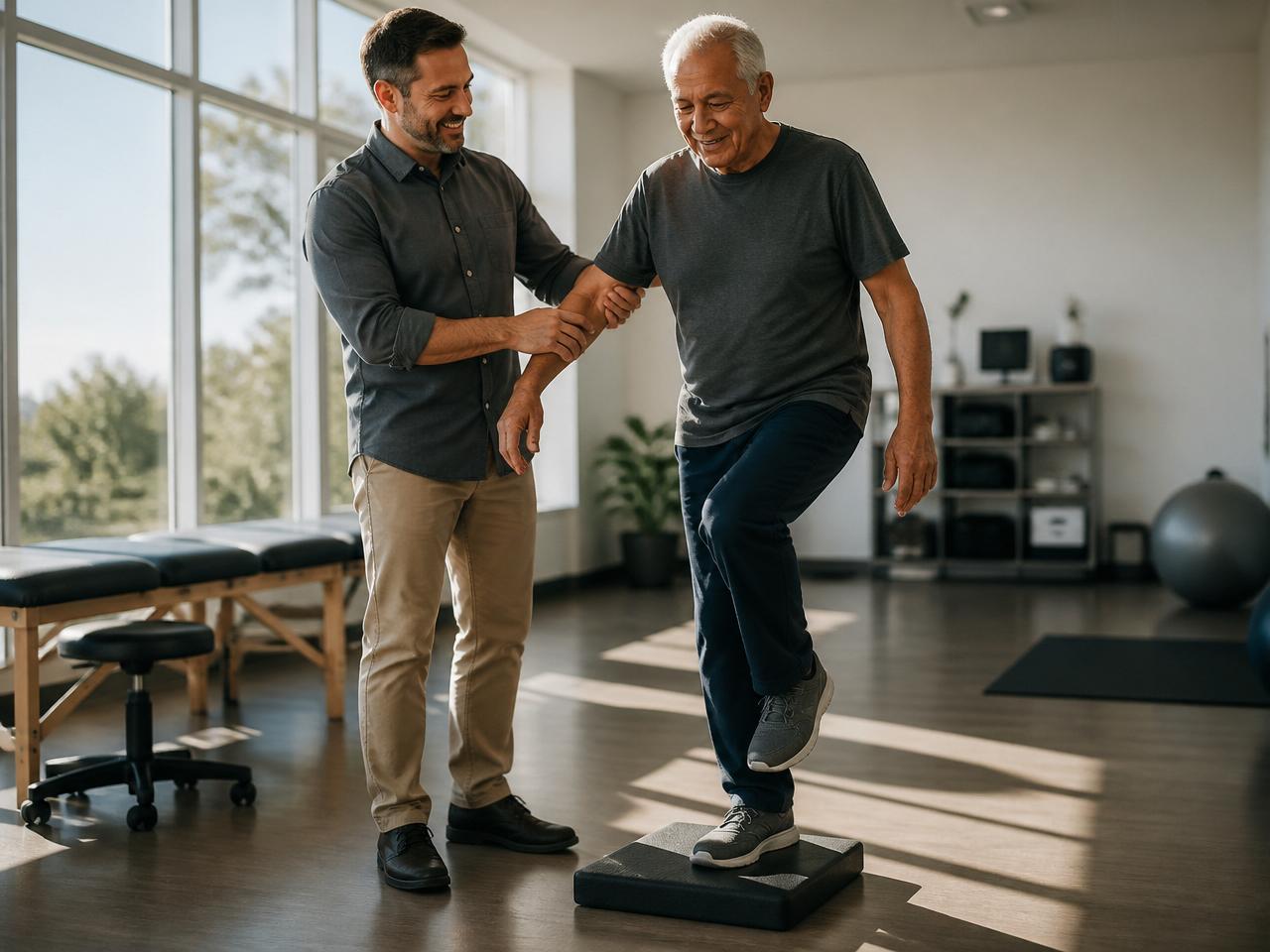
When clinically appropriate, rehabilitation may progressively challenge the specific systems identified during evaluation. The activity, sequence, intensity, and progression should reflect the person's findings and tolerance.
These categories are educational examples, not prescribed exercises. No single approach is right for every person, and rehabilitation cannot promise a particular outcome.
A Functional Living™ Teaching Principle“The goal isn't simply to challenge the brain. The goal is to give it the right challenge, at the right intensity, at the right time.”
Tolerance can change with sleep, stress, physical activity, visual demand, cognitive load, and other factors. One difficult day does not tell the entire story.
Progress is better understood by reassessing relevant functions and looking at patterns over time. The pace and direction of change remain individual.
Understand the injury, medical care, symptom pattern, daily demands, and what has changed over time.
Select appropriate neurological, visual, vestibular, balance, cervical, and movement measures.
Consider which findings may be relevant and whether additional medical evaluation or co-management is needed.
Create an individualized rehabilitation approach based on findings and current tolerance when appropriate.
Repeat relevant measures and adjust the type, intensity, or complexity of the challenge over time.
Concussion is a medical condition, and an acute head injury requires appropriate medical evaluation. Leon Chiropractic's neurological and vestibular evaluation and rehabilitation do not replace emergency care or necessary medical management.
Explore a related system, begin with an educational screening, or start a conversation with the Leon Chiropractic team.
Begin Your Journey with Dr. Leon