Balance & Postural Control
How stability changes with stance, movement, and different sensory demands.
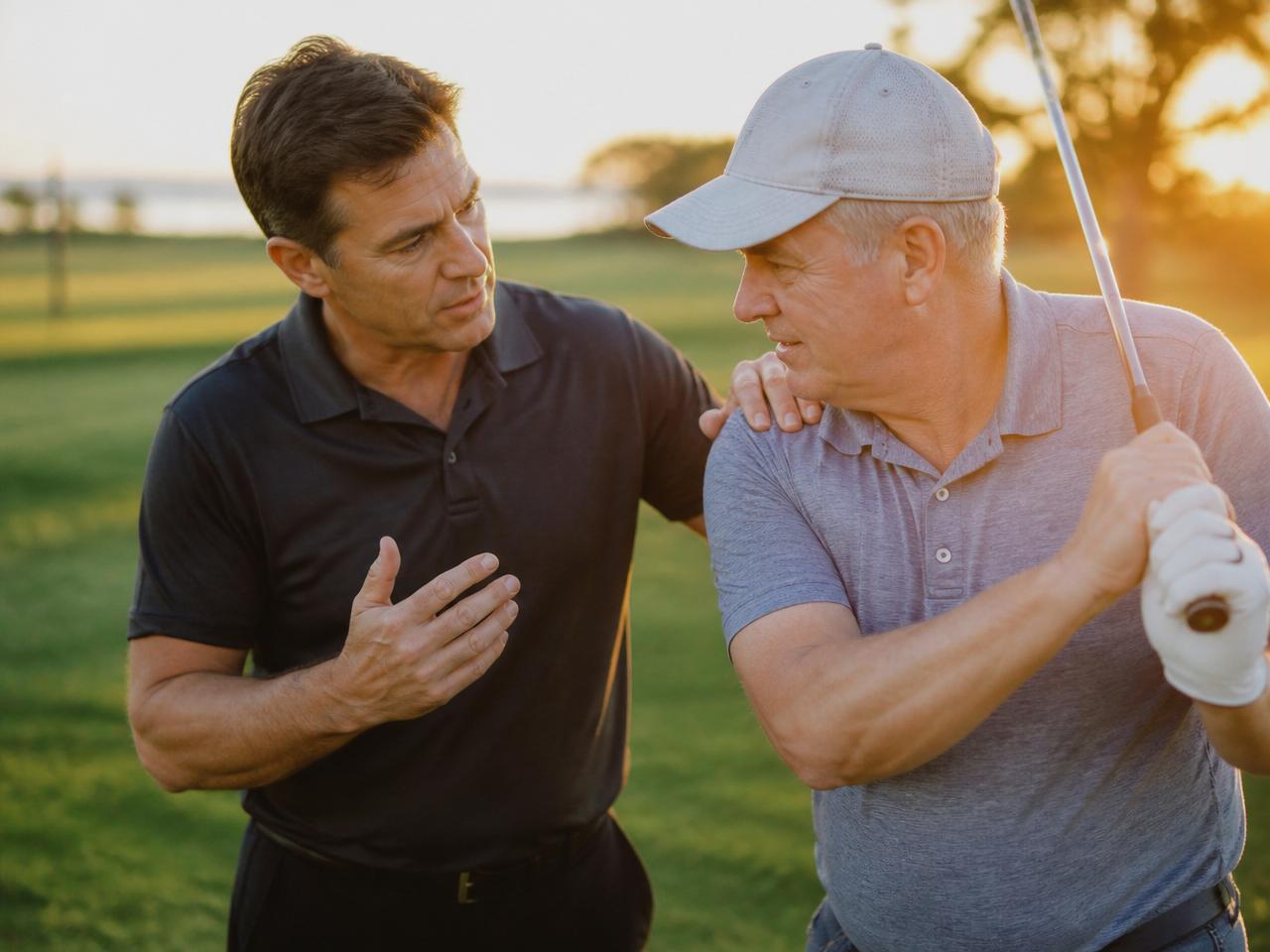
NeuroSync Golf is Dr. Leon’s signature golf pathway. It considers how vision, balance, proprioception, processing, coordination, and movement work together within the specific demands of the game.
Evaluation findings provide an individualized functional snapshot. They do not guarantee improved performance or predict a specific athletic outcome.
These broader athletic principles explain the foundation of NeuroSync Golf. Your eyes may identify the target. Your vestibular system helps orient you in space. Proprioceptive information tells the brain where your body is. The brain must integrate that information and produce an appropriate movement response.
Performance
A coordinated response to the task and environment
A simplified educational model. Athletic performance is complex and individual.
Dr. Leon may examine how relevant systems perform alone and together. The goal is to identify areas worth emphasizing within an individualized performance program—not to assign a universal score or compare an athlete with an invented standard.
How stability changes with stance, movement, and different sensory demands.
How the eyes hold, follow, and shift between relevant targets.
How an athlete receives information and organizes an appropriate response.
How accurately movement is sequenced and timed during selected tasks.
How clearly the nervous system senses position and movement.
How the body organizes rotation, control, rhythm, and available motion.
How control is maintained while slowing, stopping, or changing direction.
How visual, vestibular, sensory, and movement information works together.
NeuroSync brings functional neurology, vestibular thinking, and movement evaluation into the performance conversation. The assessment creates a functional snapshot that may help identify which systems deserve attention within a tailored plan.
For golfers, that may include balance, visual targeting, proprioception, head movement, hip and thoracic rotation, sequencing, and stability. These systems may influence how a golfer organizes the swing, but no evaluation can promise a lower score or a specific result.
“Two athletes can have the same strength and the same skill—and still perform differently. The difference may be how efficiently they take in information, process it, and turn it into movement.”
Sport asks the nervous system to interpret changing information and act while the play, stride, or swing is already unfolding. The title is a conceptual reminder—not a claim about a universal human reaction time.
The body often has to make corrections while movement is already happening.
Balance, visual targeting, head movement, rotation, sequencing, stability, and consistency.
The established NeuroSync Golf Performance pathway applies the broader brain–body model to the specific sensory and movement demands of golf.
Rhythm, proprioception, stability, movement symmetry, and adaptation to changing terrain and pace.
Visual tracking, reaction, direction changes, coordination, and deceleration under changing demands.
Movement, coordination, balance, and age-appropriate performance development.
Maintaining movement confidence, balance, coordination, and physical capacity for an active life.
NeuroSync Golf remains the established program shown on this page. The other examples show how brain–body principles can appear across athletic contexts; they do not represent separate programs or promise injury prevention or performance improvement.
The blueprint is not a fixed protocol. It is a working strategy shaped by the athlete’s findings, goals, response, and changing demands.
Measure. Intervene. Re-measure.
The same evaluation-first philosophy guides work in the Functional Recovery Lab™.
Learn how the relevant systems are evaluated, or begin a conversation with Dr. Leon.
Begin Your Journey with Dr. LeonBefore we train the swing, we test the signal. Begin with the Neural Stress Test™.